


.jpg)

How Safari Animals Use Pattern and Camouflage to Survive
Life in the bush is shaped as much by subtle detail as by size, strength and speed. Many of the animals found in the African savannah rely on patterns, colour, and markings as finely tuned survival tools. What may appear decorative or a special quirk can, in reality, be ways to camouflage, communicate, regulate body temperature, and outsmart predators.

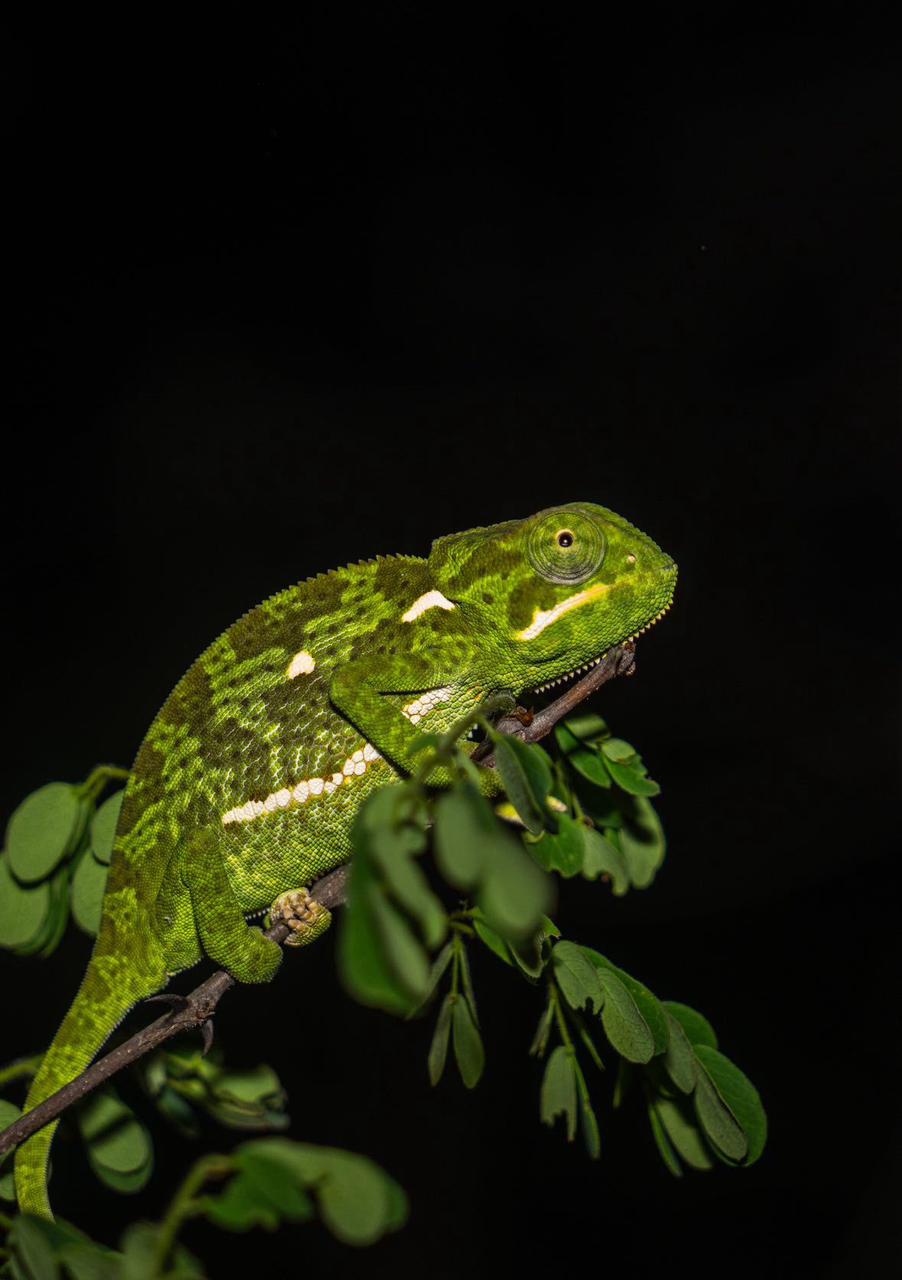
Flap-Necked Chameleon in the Spotlight
While on a game drive, you will certainly be eager to spot the Big Five, but don’t overlook smaller species like the flap-necked chameleon. They are tiny, but they are mighty, and just wait until you see one after dark…
As one of the only chameleon species found at Umkumbe Bush Lodge, the flap-necked chameleon is perfectly adapted to bushlife. During the day, they disappear effortlessly into the thickets and are rarely seen.
But did you know that chameleons don’t change colour for camouflage alone? Their colour adapts to their mood, the temperature and is used for communication. This is the result of specialised skin cells controlling how light is absorbed and reflected.
This survival feature, however, makes the flap-necked chameleon easier to spot during evening game drives. Appearing luminous under the beam of the searchlight, the chameleon is a special sighting for those paying close attention.
Whether they’re blending in or standing out, the flap-necked chameleon reminds us that the mystique of the bush is in the small and subtle details.
A Leopard Can’t Change Its Spots
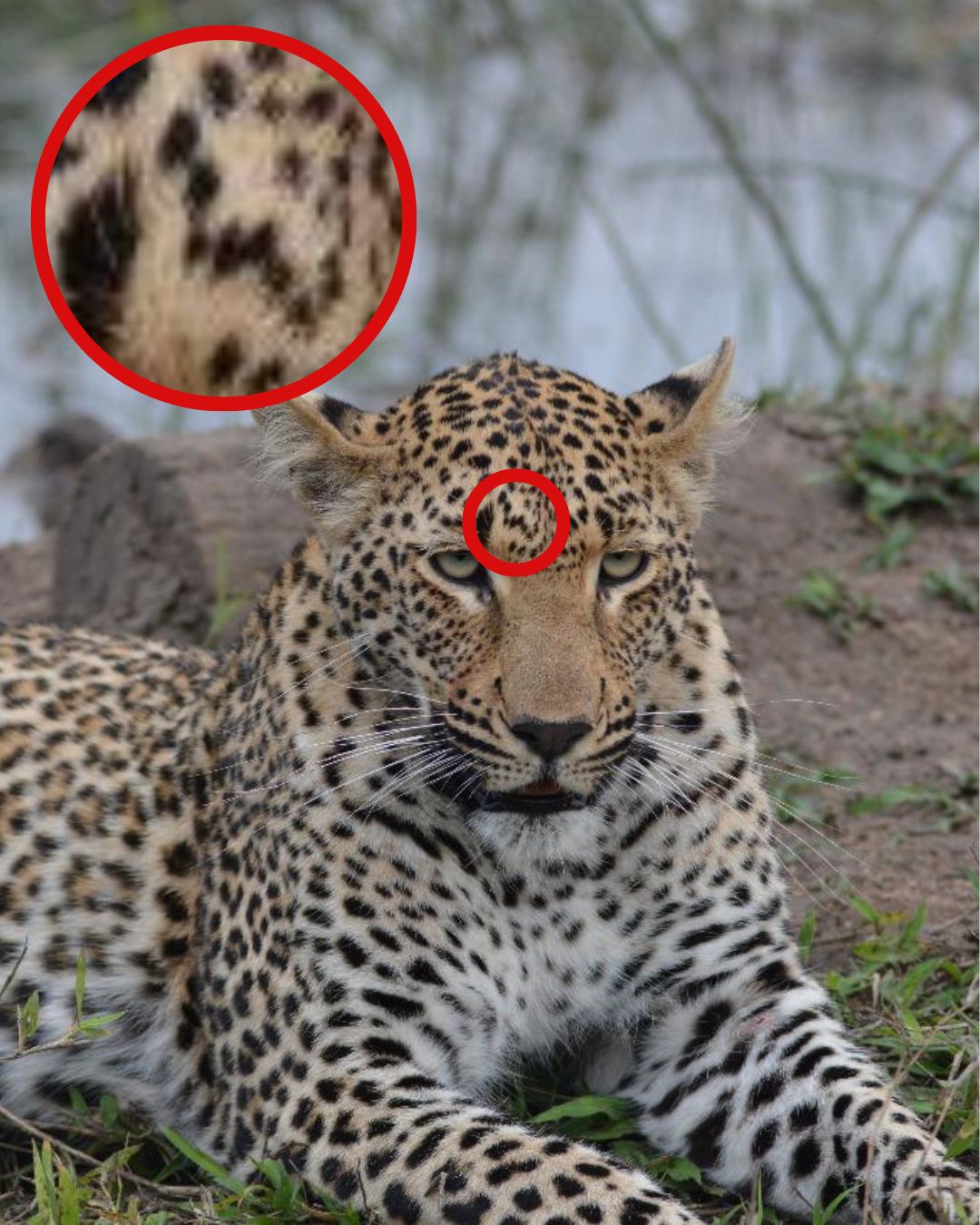
Leopards are masters of camouflage; few animals compete when it comes to hiding in plain sight. With rosettes, instead of solid spots, their coat features a broken pattern that disrupts the outline of the body. Whether draped over a branch or moving silently through grass, this large predator can become almost invisible, dissolving into shadow.
Camouflage is vital to a leopard’s hunting style, relying on stealth and ambush rather than speed. Their coats allow them to coexist close to prey species that may be completely unaware of their presence. Sometimes, they can disappear right in front of you, which makes the trained eye of our experienced trackers invaluable in the bush.
Each leopard’s pattern is unique, allowing them to be identified over time – a valuable tool for our experienced guides. “A leopard can’t change its spots” is more than an idiom – it is a useful tool when telling these cats apart. One way of doing this is by looking at the spots above their whiskers, which stay the same throughout the animal’s life.
.jpg)
African Wild Dog Patterns and Pack Hunting
The African wild dog is also known as the painted dog, and it's scientific name, Lycaon pictus, translates to “painted wolf”. With coats that appear like an abstract painting for black, brown, tan and white patches, the name is only suited.
Although their patterns appear chaotic at first, there is method in the madness – as with all art. Each African wild dog’s coat is as unique as a fingerprint, aiding with recognition in the pack. Meanwhile, the high contrast patchwork and white-tipped tails make pack members easy to follow during fast-paced hunts through thick vegetation. The moving patterns also confuse prey when being hunted down.
African wild dogs rely heavily on cooperation, and their distinctive patterns support this social structure. So, what looks like chaos is in reality clarity and the key to one of the most successful hunting strategies in the African wilderness.
.jpg)
What’s the Purpose of a Giraffe’s Pattern?
The South African giraffe – a subspecies of the Southern Giraffe – found in the Greater Kruger National Park, is characterised by its star-shaped pattern. Their coats are embellished with brown-shaded patches, surrounded by a light tan colour. From the moment a giraffe calf is born, these completely unique patchwork coats are fully developed.
With camouflage as its primary function, the giraffe’s patterns help them blend with the dappled woodland light. As an additional benefit, the giraffe’s coat aids in temperature regulation. Each patch contains a network of blood vessels that help these gentle giants stay cool in the African heat. Far from just decorative, the giraffe’s coat is avital survival tool, perfectly adapted to life in the bush.
.jpg)
Why do Zebras Have Stripes?
It is no coincidence that a group of zebras is known as a dazzle. The collective name perfectly describes the function of a zebra’s stripes in the wild. Although their stripes are bold – easily catching the eye of a safari goer – the pattern is effective for survival.
Although each zebra’s pattern is unique for identification, it has the opposite effect from the predator’s perspective. When a dazzle of zebras moves together, their high-contrast coats create an optical illusion. This makes it difficult for predators to single out an individual target.
Although stripes develop quickly, foals stay close to their mothers within the dazzle. This behaviour is not merely forimmediate protection; it also helps with social and visual integration.Together, these distinctive patterns are not merely beautiful but a finelytuned adaptation that allows zebras to thrive in the bushveld.
.jpg)
Safari goers Also Ask
Why are no two animal patterns the same?
Just like fingerprints, most patterns are completely unique, with no two animals having identical patches, stripes or spots – even within the same subspecies. In many cases, this helps with identification in a pack. Sometimes, as with African wild dogs, distinctive patterns also support social structure within a pack.
How do group animals use coat patterns during movement and hunting?
There is power in numbers – this is especially true for certain wildlife when hunting or being hunted.
In the African bush, few animals dazzle like the zebra. As masters of predator confusion, zebras rely on their high-contrast stripes – and each other – to survive. When running together,their coats cause a flickering effect which misleads the predator and disrupts their ability to single out a target.
In the case of predators, the African wild dog has earned the reputation as one of the most effective hunters. This is partially thanks to their mottled coats. Their spots are more than just an aesthetic feature – it’s a survival tool that keeps pack members visible to each other while confusing prey.
Do only prey animals use camouflage in the African bush?
As an evolutionary response, shaped by environment and necessity, camouflage is not exclusive to predators nor prey. In the African bush, prey camouflage to avoid being hunted, predators use camouflage to stalk and take down it's prey. While a leopard has it's rosettes to go completely undetected, the African wild dog’s painted markings contribute to their notoriously successful hunting strategy.
Aside from camouflage, what are the benefits of patterns in the wild?
Patterns serve many different functions including thermoregulation, predator confusion and social bonds. Patterns can even be a form of communication. The male Bennett’s Woodpecker, found at Umkumbe Bush Lodge, boasts a bright red crown to signal dominance during territorial displays and courtship.
.jpg)
For safari goers, learning these interesting facts can add new depth to every encounter. And this is just scratching the surface. As African wildlife experts, our guides turn the bush into life’s classroom that will help you look at nature’s refined details with new eyes.
Never Miss an Encounter
Have updates and news from the bushdelivered straight to your inbox. Subscribe to our mailing list for exclusive offers and inside information.

More from Umkumbe Bush Lodge
Calling all young explorers! Are you ready to discover the wild side of Africa? When you visit Umkumbe Bush Lodge, you're not just coming on holiday with Mom and Dad. You're stepping into the incredible world of the African bush — where every game drive is a new adventure and you never know what you might find around the next corner!
Umkumbe Bush Lodge is set in the Sabi Sand which is part of the Sabie Game Reserve and famous for its leopards. Yet, in the heart of autumn, it was a baby zebra that stole the spotlight. Over the past month, guides, guests, and photographers across the reserve have been enthralled about a sighting that nobody quite expected: a foal so pale it looks almost ghostlike against the bushveld. Moving steadily with the dazzle, as integrated and accepted as a completely normal black-and-white foal would be.

